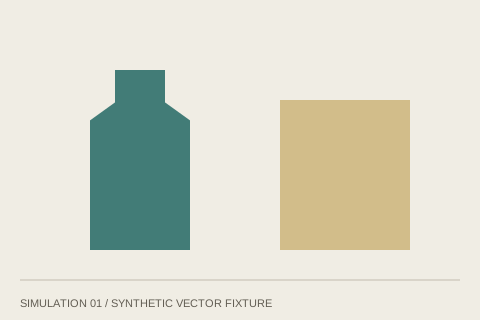
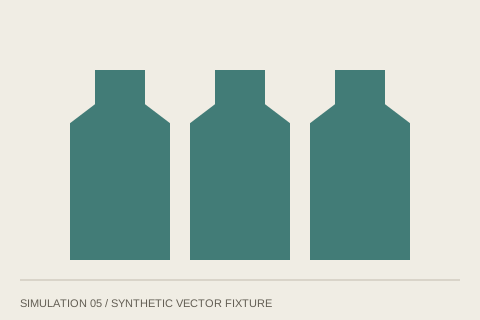
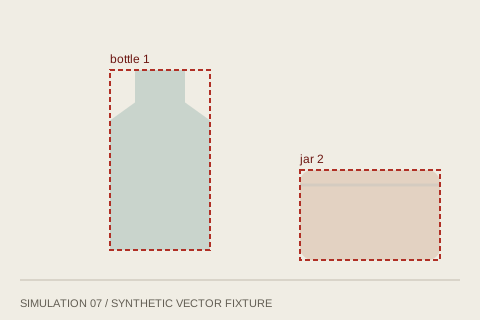
All eligible target objects labeled using the class definitions.
Clean synthetic silhouettes; no intentionally added blur or low contrast.
Criteria, consistency and QC
Policy v1.1: visible-extents boxes; class rules in methodology; flag occlusion and truncation; exclude background and captions.
Escalate uncertain class or boundaries; do not infer brand, product contents or hidden areas. All eligible target objects labeled using the class definitions.
Use the same taxonomy and pixel/normalized-coordinate convention across all ten scenes; compare repeated bottles against sim-05.
Bounds and normalization checked programmatically; reference overlays visually reviewed. Independent human annotation and agreement measurement are pending.
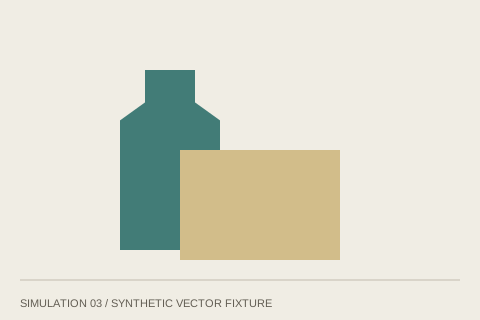
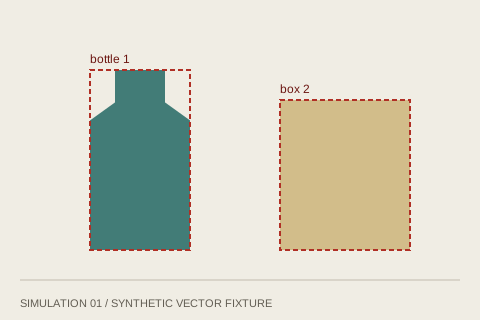
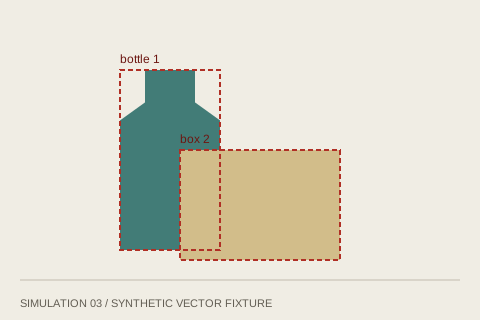
Bottle partially covered by the foreground box; visible-extents policy applies.
Clean synthetic silhouettes; no intentionally added blur or low contrast.
Criteria, consistency and QC
Policy v1.1: visible-extents boxes; class rules in methodology; flag occlusion and truncation; exclude background and captions.
Escalate uncertain class or boundaries; do not infer brand, product contents or hidden areas. Bottle partially covered by the foreground box; visible-extents policy applies.
Use the same taxonomy and pixel/normalized-coordinate convention across all ten scenes; compare repeated bottles against sim-05.
Bounds and normalization checked programmatically; reference overlays visually reviewed. Independent human annotation and agreement measurement are pending.
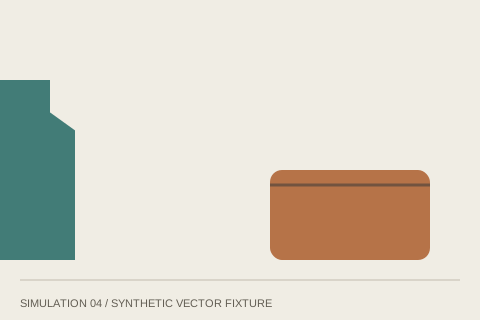
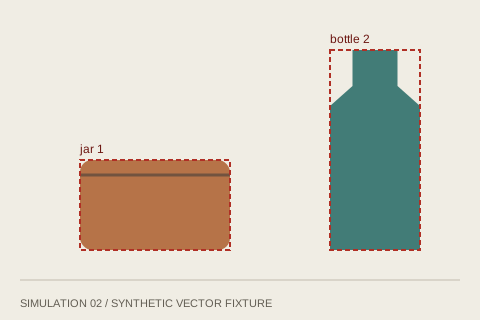
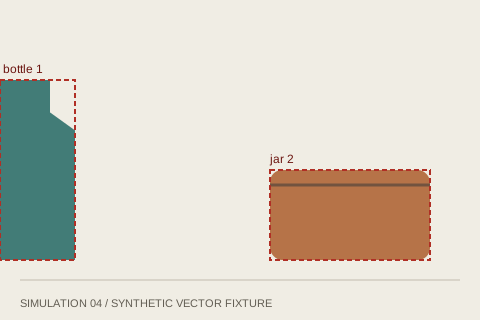
Left bottle extends beyond the image; annotate only the in-frame portion.
Clean synthetic silhouettes; no intentionally added blur or low contrast.
Criteria, consistency and QC
Policy v1.1: visible-extents boxes; class rules in methodology; flag occlusion and truncation; exclude background and captions.
Escalate uncertain class or boundaries; do not infer brand, product contents or hidden areas. Left bottle extends beyond the image; annotate only the in-frame portion.
Use the same taxonomy and pixel/normalized-coordinate convention across all ten scenes; compare repeated bottles against sim-05.
Bounds and normalization checked programmatically; reference overlays visually reviewed. Independent human annotation and agreement measurement are pending.
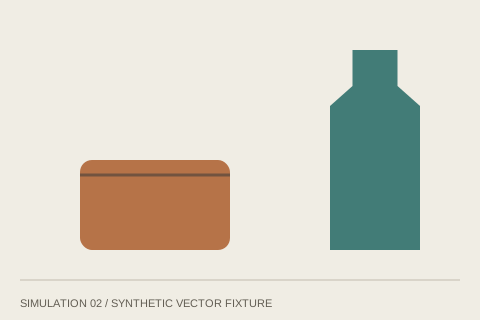
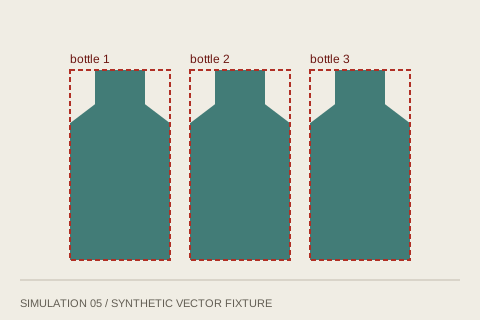
All eligible target objects labeled using the class definitions.
Clean synthetic silhouettes; no intentionally added blur or low contrast.
Criteria, consistency and QC
Policy v1.1: visible-extents boxes; class rules in methodology; flag occlusion and truncation; exclude background and captions.
Escalate uncertain class or boundaries; do not infer brand, product contents or hidden areas. All eligible target objects labeled using the class definitions.
Use the same taxonomy and pixel/normalized-coordinate convention across all ten scenes; compare repeated bottles against sim-05.
Bounds and normalization checked programmatically; reference overlays visually reviewed. Independent human annotation and agreement measurement are pending.
Blur is deliberately applied; boxes follow nominal silhouette extents, not the blur halo. Review before acceptance.
Deliberate blur reduces edge definition; exclude blur halo under this exercise policy.
Criteria, consistency and QC
Policy v1.1: visible-extents boxes; class rules in methodology; flag occlusion and truncation; exclude background and captions.
Escalate uncertain class or boundaries; do not infer brand, product contents or hidden areas. Blur is deliberately applied; boxes follow nominal silhouette extents, not the blur halo. Review before acceptance.
Use the same taxonomy and pixel/normalized-coordinate convention across all ten scenes; compare repeated bottles against sim-05.
Bounds and normalization checked programmatically; reference overlays visually reviewed. Independent human annotation and agreement measurement are pending.
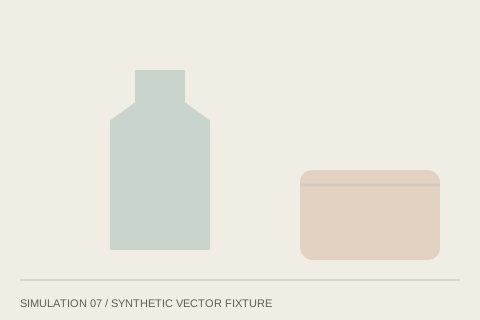
Low contrast is deliberately applied; verify class and extent manually.
Deliberate low contrast reduces separation from the background.
Criteria, consistency and QC
Policy v1.1: visible-extents boxes; class rules in methodology; flag occlusion and truncation; exclude background and captions.
Escalate uncertain class or boundaries; do not infer brand, product contents or hidden areas. Low contrast is deliberately applied; verify class and extent manually.
Use the same taxonomy and pixel/normalized-coordinate convention across all ten scenes; compare repeated bottles against sim-05.
Bounds and normalization checked programmatically; reference overlays visually reviewed. Independent human annotation and agreement measurement are pending.
Policy v1.1: visible-extents boxes; class rules in methodology; flag occlusion and truncation; exclude background and captions.
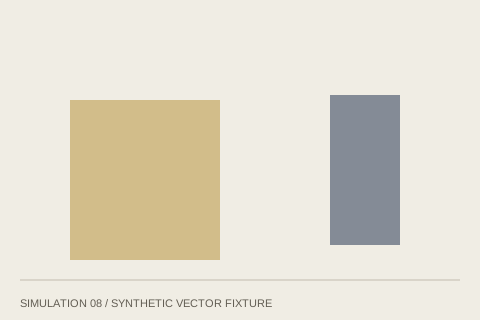
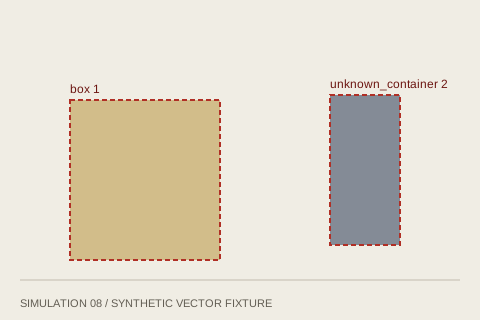
Escalate uncertain class or boundaries; do not infer brand, product contents or hidden areas. The narrow silhouette lacks enough defining detail for bottle vs box. Use unknown_container and escalate.
Use the same taxonomy and pixel/normalized-coordinate convention across all ten scenes; compare repeated bottles against sim-05.
Bounds and normalization checked programmatically; reference overlays visually reviewed. Independent human annotation and agreement measurement are pending.
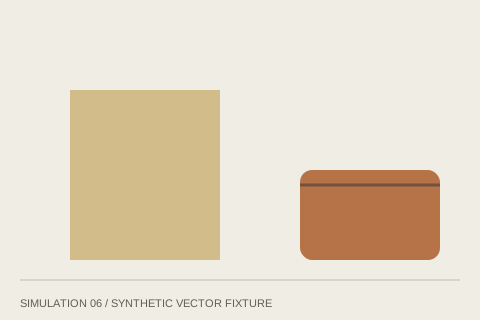
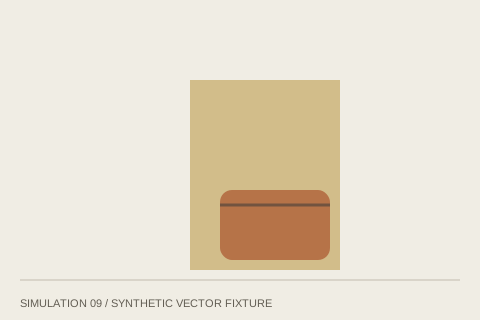
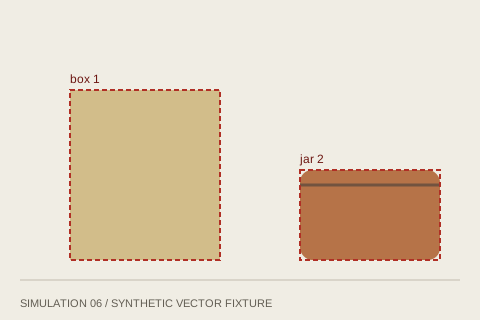
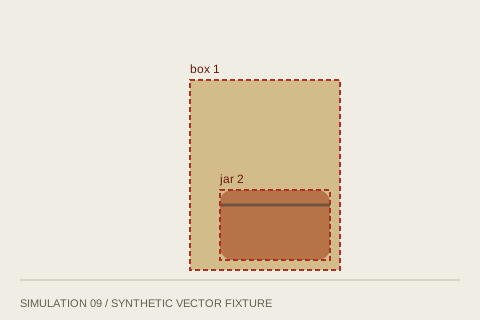
The foreground jar covers part of the box; retain visible-extents bounds.
Clean synthetic silhouettes; no intentionally added blur or low contrast.
Criteria, consistency and QC
Policy v1.1: visible-extents boxes; class rules in methodology; flag occlusion and truncation; exclude background and captions.
Escalate uncertain class or boundaries; do not infer brand, product contents or hidden areas. The foreground jar covers part of the box; retain visible-extents bounds.
Use the same taxonomy and pixel/normalized-coordinate convention across all ten scenes; compare repeated bottles against sim-05.
Bounds and normalization checked programmatically; reference overlays visually reviewed. Independent human annotation and agreement measurement are pending.
Background and decorative line only; no eligible target. Empty annotation list is intentional.
Clear background-only negative example; no eligible object visible.
Criteria, consistency and QC
Policy v1.1: visible-extents boxes; class rules in methodology; flag occlusion and truncation; exclude background and captions.
Escalate uncertain class or boundaries; do not infer brand, product contents or hidden areas. Background and decorative line only; no eligible target. Empty annotation list is intentional.
Use the same taxonomy and pixel/normalized-coordinate convention across all ten scenes; compare repeated bottles against sim-05.
Bounds and normalization checked programmatically; reference overlays visually reviewed. Independent human annotation and agreement measurement are pending.
Purpose and provenance
Ten original synthetic vector illustrations demonstrate object labeling, bounding-box conventions and quality triage. They are not photographs, client data or production annotations. Fixtures and draft reference labels were prepared with AI assistance for Wildan's portfolio. Wildan has not yet independently completed or validated this exercise. The samples demonstrate a proposed process, not measured personal accuracy.
Scope and class definitions
- bottle: container with a visibly narrower neck or cap and wider body.
- jar: squat container with a visible lid division and rounded body.
- box: rectangular package without a visible neck or jar lid, with width at least 65% of height under this synthetic-task policy. Narrower ambiguous silhouettes go to unknown_container.
- unknown_container: object that appears container-like but lacks enough detail for a reliable class. Escalate rather than force a label.
- Exclude background, floor lines, shadows and fixture captions. Annotate all eligible visible objects. An empty scene receives an empty objects list.
Coordinate and edge-case policy
Every canvas is 480 by 320 pixels. Bounding boxes are [x_min, y_min, x_max, y_max], using the top-left origin and exclusive maximum edges. Normalized coordinates divide x values by 480 and y values by 320. Boxes enclose the visible object's extrema; do not infer off-frame or fully hidden regions. Flag occlusion and truncation separately. For the intentionally blurred fixture, use nominal silhouette boundaries and exclude the blur halo; send the record for review. Never infer real product identity, brand or contents from these shapes.
Methodology
1. Read the class definitions and inspect the full scene.
2. Identify each target, assign a class, then draw its tight visible-extents box.
3. Add occlusion, truncation and review flags. Log uncertain decisions.
4. Review every scene again for omissions, duplicate labels and bounds outside the canvas.
5. A second reviewer adjudicates disagreements using this policy; update the policy version if needed.
Rubric and acceptance
Score each dimension 0, 1 or 2. Coverage: 2 = all targets exactly once; 1 = minor duplicate; 0 = missed target. Classification: 2 = policy-consistent labels; 1 = unresolved ambiguity flagged; 0 = unsupported class. Geometry: 2 = tight visible bounds; 1 = small boundary discrepancy; 0 = materially wrong or invalid box. Attributes: 2 = all flags correct; 1 = one uncertain flag; 0 = missing material flag. Documentation: 2 = reproducible rationale; 1 = incomplete note; 0 = no rationale for a disputed decision.
Proposed acceptance: at least 9/10, with full coverage and no zero on any dimension. Ambiguous class or quality flags require review regardless of score. This is an exercise rubric, not a score earned by Wildan. If using a second annotation set, calculate intersection over union as overlap area divided by union area; a proposed 0.90 threshold triggers review below it. IoU is a geometry aid, not proof that a class is correct. No inter-annotator agreement or accuracy is claimed.
Files and limits
The gallery shows raw fixtures and labeled versions. annotations.json contains the reference records. reviewer-worksheet.json contains empty fields for an independent pass. Vector shapes have known nominal geometry and are simpler than real photography. Generalization to real-world annotation, throughput and quality has not been assessed.
Source rights and coverage
The ten images are original synthetic fixtures created for this package, not licensed stock or client photographs. Source and usage notes are included in samples/image-rights.md. Each JSON record now contains annotation criteria, quality observations, ambiguity handling, consistency review and quality-control notes. These simplified illustrations do not demonstrate real-photograph annotation.